
Der Frühling wird oft mit Wachstum und Erneuerung in Verbindung gebracht. Für Kommunen und Organisationen ist er zudem eine Zeit, in der sie ihre Prioritäten überprüfen und planen, wie sie ihren Gemeinden besser dienen können. Zunehmend geht es dabei um eine praktische Herausforderung: Wie lässt sich der wachsende Bedarf an Sport- und Freizeiträumen in Innenräumen decken?
Genau hier setzt Sprung Structures neue Maßstäbe. Mit seinem Angebot an schnell realisierbaren und kostengünstigen Sportanlagen bietet Sprung eine Lösung, die für viele Gemeinden, die mit knappen Budgets und dringendem Bedarf zu kämpfen haben, den entscheidenden Unterschied ausmachen kann – ob ein Projekt vorangetrieben oder auf unbestimmte Zeit auf Eis gelegt wird.
Das Interesse am organisierten Sport nimmt weiter zu, und immer mehr Familien melden ihre Kinder für ganzjährige Programme in den Bereichen Schwimmen, Eishockey, Fußball, Basketball und anderen Sportarten an. Die Anmeldezahlen sind nach wie vor hoch, und viele Programme haben mit langen Wartelisten zu kämpfen. Gleichzeitig werden veraltete Sporthallen, Schwimmbäder und Sportanlagen geschlossen oder sind bis zur Kapazitätsgrenze ausgelastet, sodass die Gemeinden Mühe haben, mit der Nachfrage Schritt zu halten.
Besonders deutlich wird diese Belastung im Wassersport. Vor kurzem hat Swimming Canada eine Infrastrukturkrise ausgerufen und davor gewarnt, dass zu wenige Anlagen gebaut werden, um veraltete 50-Meter-Becken zu ersetzen oder der wachsenden Teilnehmerzahl gerecht zu werden. Die begrenzte Beckenzeit wirkt sich sowohl auf Freizeitschwimmer als auch auf Leistungssportler aus. Wenn Trainingsplätze knapp sind, konkurrieren Vereine um die wenigen verfügbaren Zeiten, Familien müssen weitere Wege zurücklegen und Sportler verlieren wertvolle Trainingszeit.
Das Problem geht über das Schwimmen hinaus. In vielen Regionen ist die Eiszeit begrenzt, während Hallensportarten oft auf Anlagen angewiesen sind, die entweder ausgebucht sind oder weit entfernt von den Stadtvierteln liegen, die sie versorgen.
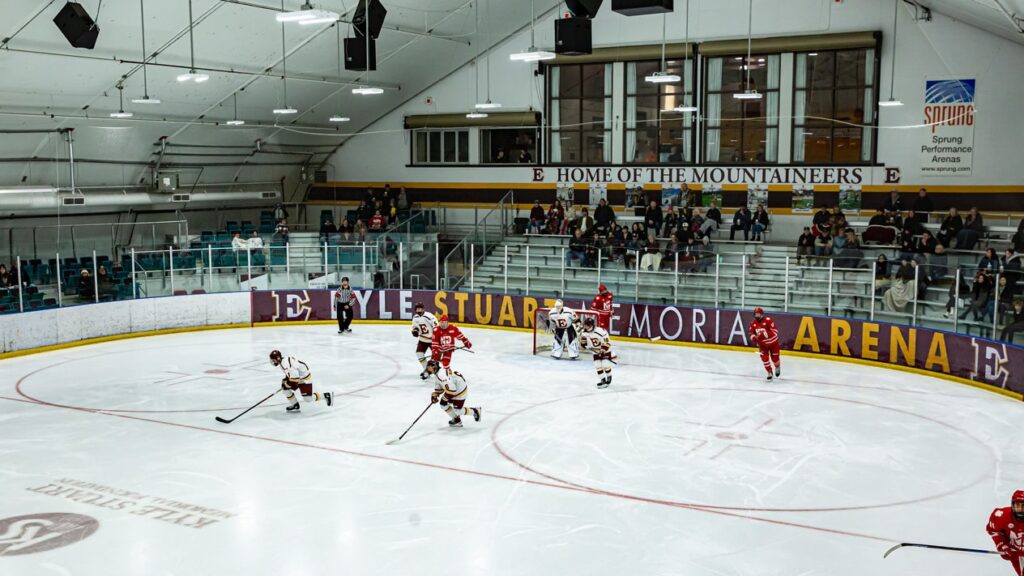
Den Bedarf an Tagungsräumen angesichts wachsender Herausforderungen decken
Für lokale Entscheidungsträger kann es schwierig sein, den Bedarf an Freizeitangeboten zu decken. Die Gemeinden wünschen sich einen besseren Zugang, doch herkömmliche Bauzeiten und -kosten können den Bau neuer Einrichtungen unerschwinglich machen. In vielen Fällen geht es nicht um die Wahl zwischen verschiedenen Gebäudetypen, sondern darum, ob überhaupt etwas gebaut wird oder nicht.
Angesichts dieser Herausforderungen entwickelt Sprung Sportanlagen mit Spannmembranen, die wesentlich schneller errichtet werden können als herkömmliche Gebäude. Der modulare Aufbau und der geringe Fundamentbedarf verkürzen die Bauzeit, sodass Gemeinden schneller und innerhalb eines angemessenen Budgets auf den Bedarf reagieren können.
Das Idaho Central Aquatic Center ist ein Beispiel dafür. Das Projekt wurde ins Leben gerufen, um dem wachsenden Interesse am Schwimmen und an Wassersportangeboten gerecht zu werden, und gelangte in einem Bruchteil der Zeit, die für herkömmliche Bauvorhaben benötigt wird, von der Planung in den Betrieb.
„Die Geschwindigkeit, mit der das Gebäude errichtet werden konnte, war für uns ein großer Vorteil“, sagt Ryan Stratton vom Idaho Central Aquatic Center. „Anstatt ein Jahr lang ein traditionelles Gebäude aus Ziegeln und Mörtel zu bauen, konnten wir ein Sprung-Gebäude innerhalb weniger Monate errichten.“
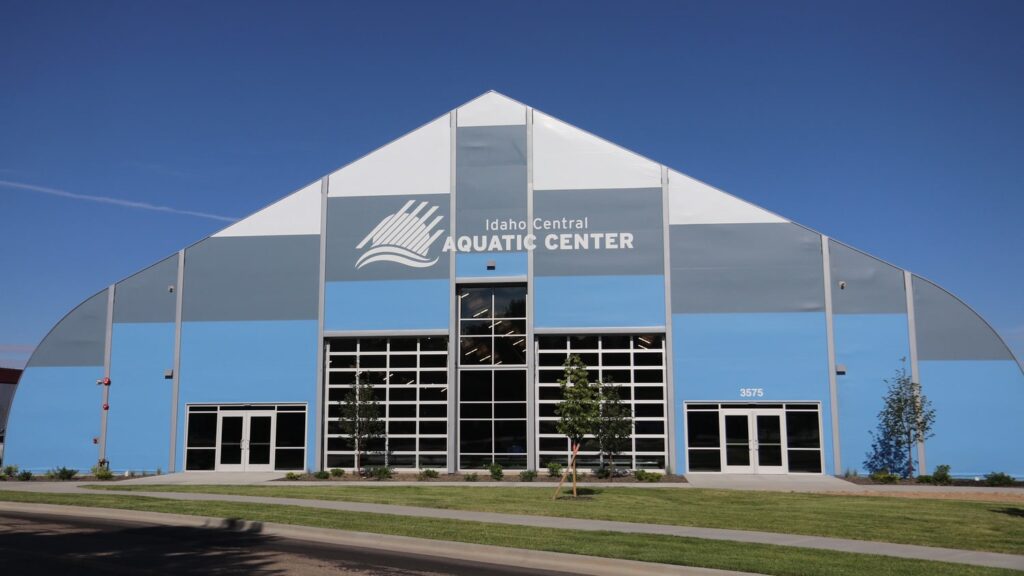
Über die Geschwindigkeit hinaus bietet Sprung finanzielle Flexibilität, die den Bau neuer Infrastruktur dort möglich macht, wo dies andernfalls nicht der Fall wäre. Geringere Vorlaufkosten sowie Kauf- und Leasingoptionen geben Kommunen und Organisationen mehr Spielraum, um Projekte voranzutreiben. Für Gemeinden mit begrenztem Budget ist eine Sprung-Anlage oft nicht nur die bevorzugte Option, sondern der einzige gangbare Weg, um neue Freizeitflächen zu schaffen.
Auch die langfristigen Betriebskosten spielen bei Planungsentscheidungen eine Rolle. Gewölbte Hallen sind auf Energieeffizienz ausgelegt – ein wichtiges Merkmal für Eishallen und Schwimmbäder, die einen hohen Heiz- und Kühlbedarf haben. Dank fortschrittlicher Membrantechnologie und hochwirksamer Dämmung lassen sich konstante Innentemperaturen aufrechterhalten, während gleichzeitig der Energieverbrauch gesenkt und die Gesamtbetriebskosten reduziert werden.
„Auf lange Sicht wird uns unser [Sprung]-Gebäude eine Menge Geld für Instandhaltung, Reparaturen, Modernisierungen und Upgrades einsparen“, sagt Nick Gaggiano, ebenfalls vom Idaho Central Aquatic Center.
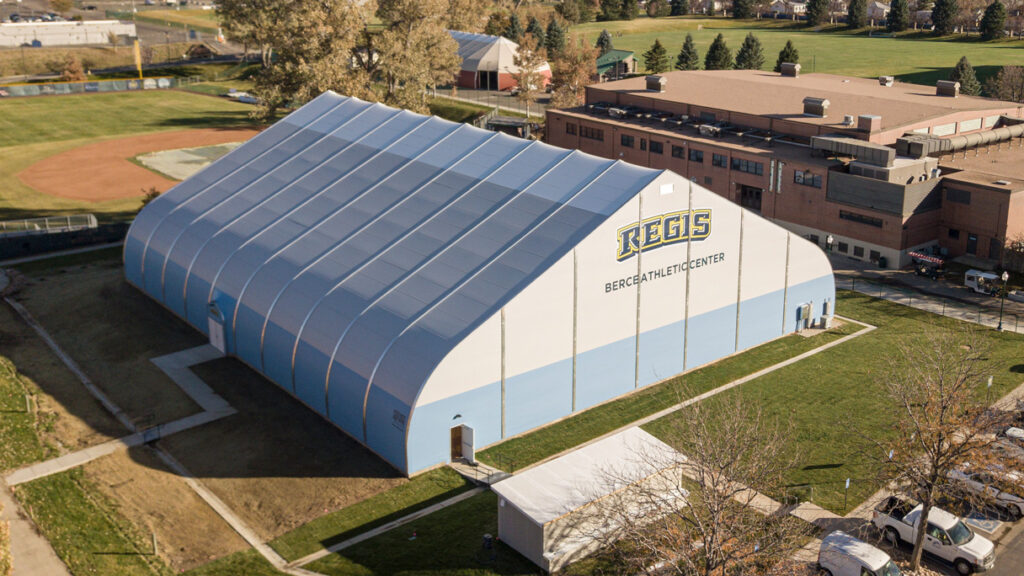
Langlebigkeit ist ein weiterer wichtiger Aspekt. Die aus strukturellem Aluminium der Serie 6000 gefertigten Sprung-Konstruktionen sind für den Einsatz unter anspruchsvollen klimatischen Bedingungen ausgelegt, darunter Regionen mit starkem Schneefall, starken Winden oder extremer Hitze. Diese langfristige Leistungsfähigkeit und die Rentabilität der Investition waren ausschlaggebend für die Regis University bei der Entscheidung für eine Sprung-Sporthalle für ihr Berce Athletic Center.
„Wir können die Rentabilität dieser Anlage über einen längeren Zeitraum hinweg maximieren“, sagt Mike Redmond, stellvertretender Vizepräsident für Gebäude und Investitionsprojekte an der Universität, und verweist dabei auf die Vorteile über den gesamten Lebenszyklus hinweg im Vergleich zu herkömmlichen Bauweisen.
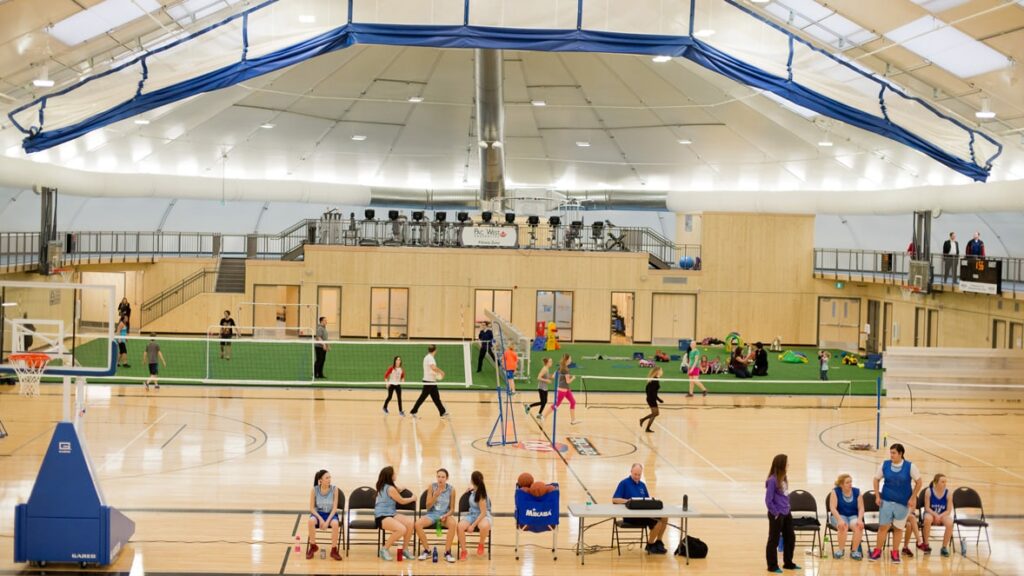
Flexible Räume für vielfältige Freizeitaktivitäten
Flexibilität ist ein weiteres Alleinstellungsmerkmal von Sprung. Die modularen Strukturen lassen sich je nach Programmentwicklung erweitern, umgestalten oder umfunktionieren. Durch die stützenfreien Innenräume mit freier Spannweite entsteht ein offener Raum für Eishallen in NHL-Größe, mehrbahnige Schwimmbecken, Indoor-Sportplätze, Turnhallen und Mehrzweckplätze, deren Anordnung sich an die sich wandelnden Bedürfnisse der Gemeinde anpassen lässt.
„Ich halte es für eine perfekte Umgebung und einen perfekten Austragungsort … denn es bietet ausreichend Freiraum für die Leichtathletik“, sagt Redmond. „[Diese Anlagen] lassen sich so anpassen und umbauen, dass sie sich hervorragend für die Leichtathletik eignen.“
Auch wenn sportliche Leistungen oft im Mittelpunkt stehen, erfüllen Sporthallen doch einen weitreichenderen Zweck. Sie dienen als Austragungsort für Turniere, Schulveranstaltungen, Fitnessprogramme und Gemeinschaftsveranstaltungen. Zudem fördern sie die körperliche Gesundheit, stärken soziale Bindungen und können durch regionale Veranstaltungen wirtschaftliche Impulse setzen.
Der Frühling ist nicht nur ein Zeichen für neues Wachstum, sondern bietet auch die Gelegenheit, sich auf die Zukunft vorzubereiten. Die Nachfrage nach Freizeitangeboten in Innenräumen ist groß: Familien wünschen sich barrierefreie Angebote, Sportler benötigen beständige Trainingsbedingungen und Organisationen brauchen Gebäude, die sich im Laufe der Zeit weiterentwickeln können.
Es wird immer wichtiger, neue Wege beim Bau von Einrichtungen zu beschreiten. Anstatt traditionellen Baumodellen zu folgen, die Projekte verzögern oder einschränken können, müssen Kommunen alternative Ansätze prüfen, bei denen Schnelligkeit, Flexibilität und Kostenkontrolle im Vordergrund stehen. In diesem Zusammenhang ist die Entscheidung für Sprung ein Weg, über den Tellerrand hinauszuschauen, um Infrastruktur zu schaffen, die andernfalls vielleicht nicht realisierbar wäre.
Durch die Kombination aus schneller Bauweise, Langlebigkeit und anpassungsfähigem Design bietet Sprung Structures Kommunen und Organisationen eine praktische Möglichkeit, ihre Freizeit- und Sportkapazitäten zu erweitern. Für Gemeinden, die vorausschauend planen, kann der Frühling mehr als nur ein Symbol der Erneuerung sein – er kann der Ausgangspunkt für Investitionen in eine Infrastruktur sein, die den Menschen hilft, über Jahre hinweg aktiv und miteinander verbunden zu bleiben.
Kontaktieren Sie uns , um mehr über die Sportstättenlösungen von Sprung zu erfahren.