Sprung’s insulated buildings are engineered to provide better climate control with optimal heating and cooling efficiency. Our virtually airtight system, which combines a fully lofted layer of fiberglass blanket insulation with a tensioned interior membrane, contributes to a highly efficient insulated building solution.
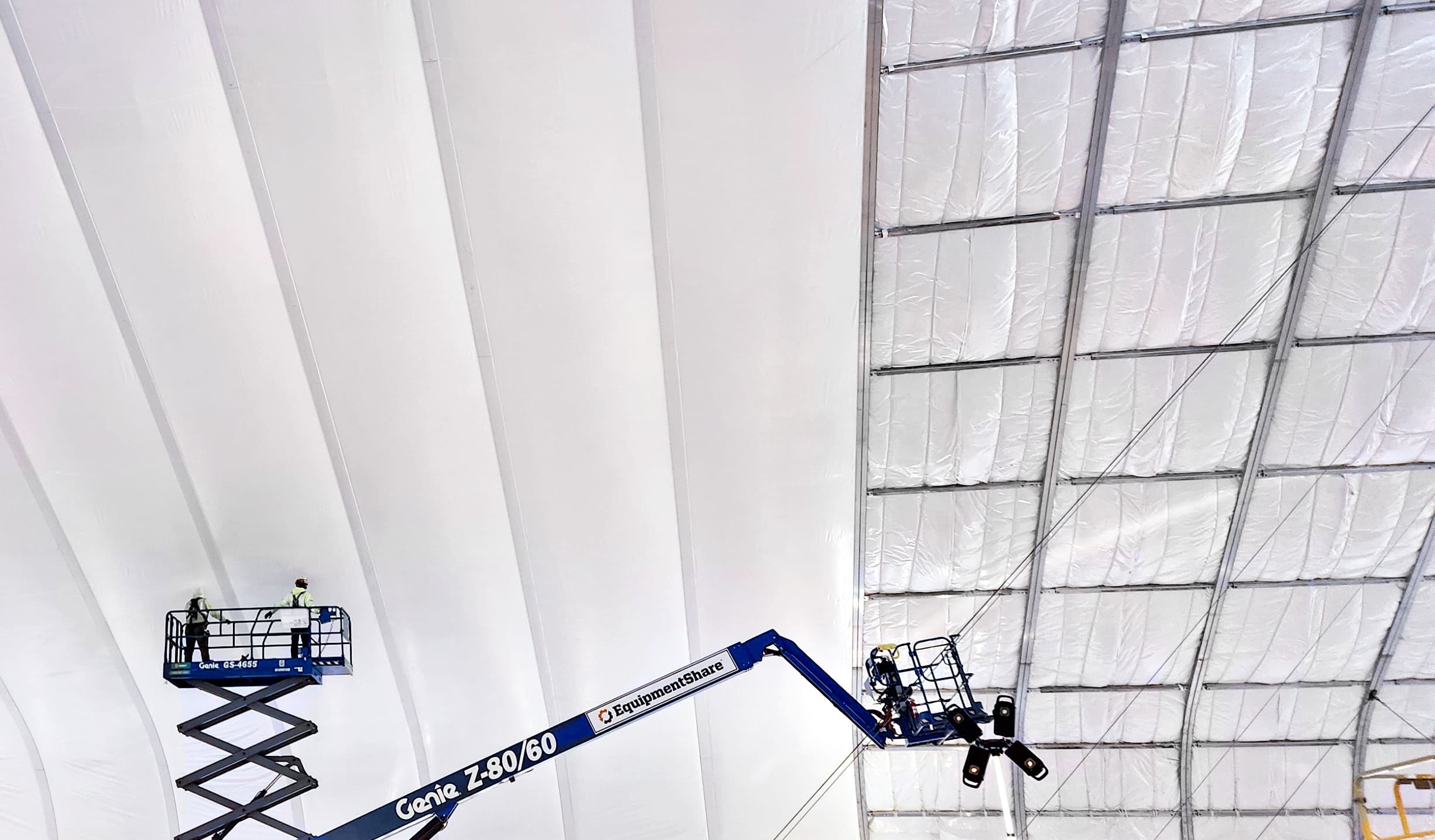
Installing interior lining after insulation.
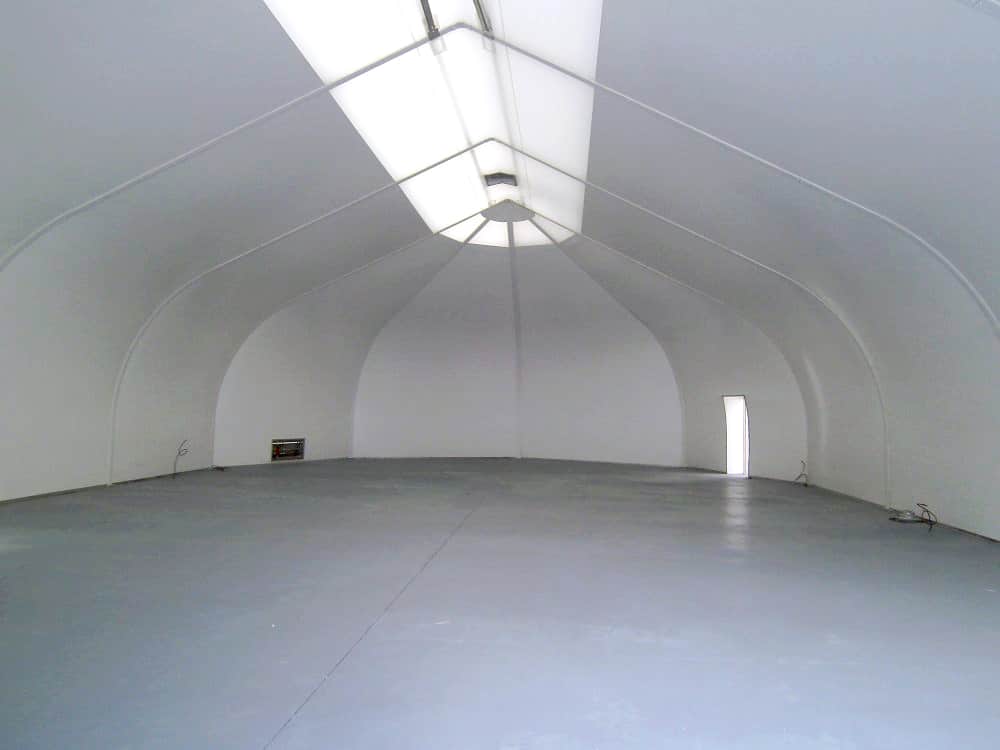
Insulated with tensioned interior lining.
Sprung’s insulated buildings perform
High-performance insulated buildings
Sprung’s advanced insulation system is engineered to enhance the energy efficiency and interior comfort of insulated buildings in any region. Designed for rapid installation and long-term durability, Sprung’s insulation solutions help maintain consistent indoor temperatures, ultimately reducing energy costs and improving overall performance in all climates. Whether used in remote military camps, industrial sites, or as community spaces for pools, gyms and more, Sprung’s insulated buildings offer reliable protection against extreme heat or cold.
With customizable insulation packages and reliable tensioned membrane technology, Sprung delivers a superior thermal envelope without sacrificing speed of deployment. The result is a building that not only goes up fast but also performs exceptionally well in the long term—making Sprung insulated buildings a smart and economical choice for demanding environments of all sorts. Reach out to our team to learn more about our performance insulated buildings.
We use a layer of formaldehyde-free fiberglass blanketing that’s up to nine inches thick for our insulated structures. This allows for a standard building envelope with insulation values ranging from R-25 to R-47, depending on sizes, configurations, and accessories (higher values can be achieved upon request). As such, our insulation structures perform better than the thinner insulation that’s typically used in metal and conventional construction, resulting in reduced climate control costs and enhanced sound absorption for better acoustics.
Our exterior architectural membrane has an envelope that allows insulation to retain its maximum thickness and achieve better performance and comfort.
The continuous wall and roof channels in a Sprung insulated structure provide maximum performance from grade to peak, ensuring a more consistent R-value rating. Insulation in metal buildings, meanwhile, is compressed throughout, significantly lowering its overall R-value.
Our insulated structures typically come complete with an interior membrane that’s more durable than drywall and offers exceptional fire-retardant capability.