
In June 2025, the U.S. Department of Energy (DOE) launched its Reactor Pilot Program to accelerate the deployment of advanced nuclear reactors, with a goal of achieving criticality for at least three reactors by America’s 250th birthday on July 4, 2026. Shortly after the launch of the pilot program, the DOE announced the first 11 reactor companies selected to participate in the initiative.
Among those companies was Valar Atomics, a start-up working to make nuclear reactors smaller, simpler and faster to deploy. To meet the program’s aggressive timeline, Valar had to move quickly. In August 2025, the company selected Sprung to provide the Reactor Complex and Fuel Labs needed to support the development and testing of its advanced microreactor, known as Ward 250.
A Race Against Time
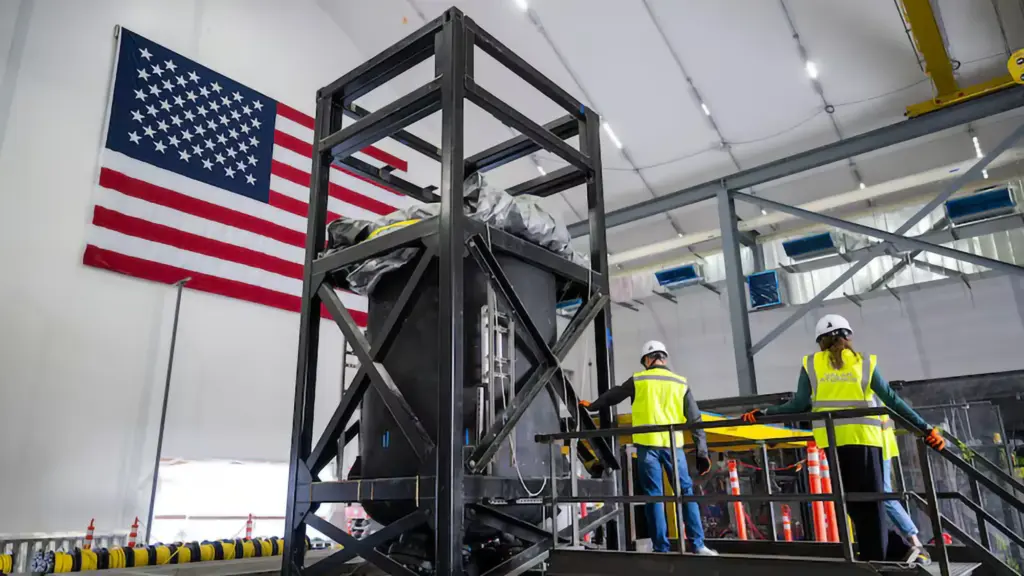
For most construction projects, months of planning are followed by months, or even years, of building. The Valar team didn’t have that kind of time. With the Fourth of July deadline looming, the company required specialized facilities that could be designed, delivered and operational on a highly accelerated schedule.
Sprung’s approach made that possible. By combining prefabricated components with minimal foundation requirements and an efficient installation process, construction at Valar’s Utah-based testing site moved quickly, without compromising the durability and long-term performance the project demanded. Within seven months, both structures were complete, providing Valar with the facilities it needed to move the Ward 250 into its next phase.
Built Around the Mission
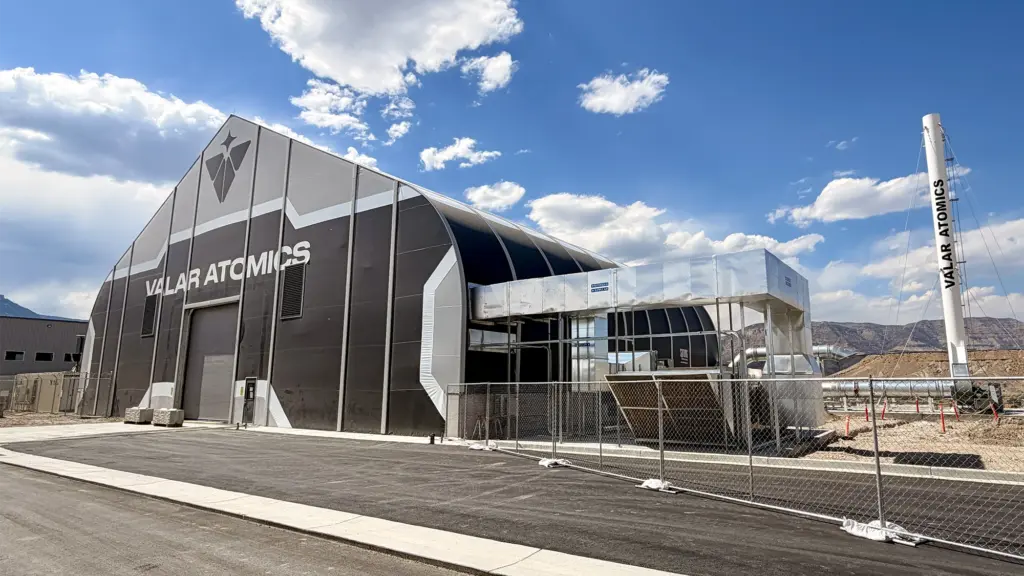
Of course, speed was only part of the equation. Both buildings also had to facilitate the highly technical work taking place inside them.
As such, the Sprung team carefully designed the Reactor Complex and Fuel Labs to fully support Valar’s research and testing activities. Large, clear-span interiors accommodate specialized equipment, overhead cranes and evolving operational needs, while oversized rolling service doors simplify the movement of materials and components. The structures also support the advanced mechanical systems required for nuclear research, including the ability to maintain negative-pressure environments.
Ahead of Schedule
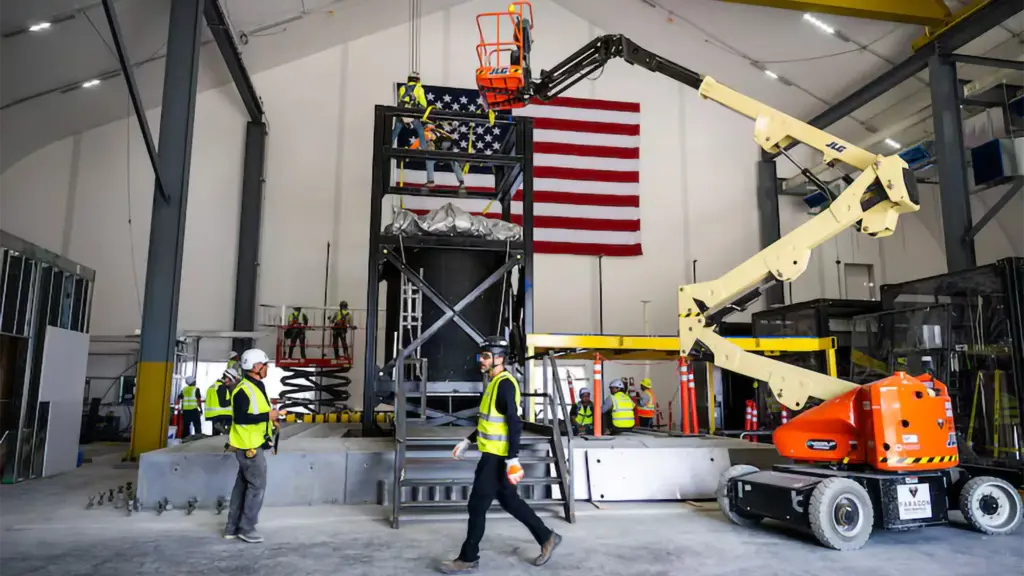
By early 2026, the Reactor Complex and Fuel Labs were fully operational, providing approximately 45,000 square feet of purpose-built space for assembly, testing and development activities as the company worked toward achieving Ward 250’s first major milestone.
That milestone came sooner than expected.
On June 18, 2026, more than two weeks before the July 4 deadline set out by the federal government, Valar’s Ward 250 achieved zero-power criticality. The accomplishment made it the second reactor to reach criticality under the Reactor Pilot Program, and the first DOE-authorized reactor built outside a national laboratory.
For Valar founder and CEO Isaiah Taylor, reaching criticality wasn’t the finish line. Instead, it marked the beginning of the company’s next course of action at its Utah-based facility:
“Nine months ago, this was an empty site,” said Taylor at a press conference. “Today, there’s a critical reactor on it, built and operated by the Valar team. We met the milestone the executive order set. This reactor was built to make power, and that’s exactly where we’re headed.”