

Ausgewählte Projekte von Obdachlosen-Navigationszentren







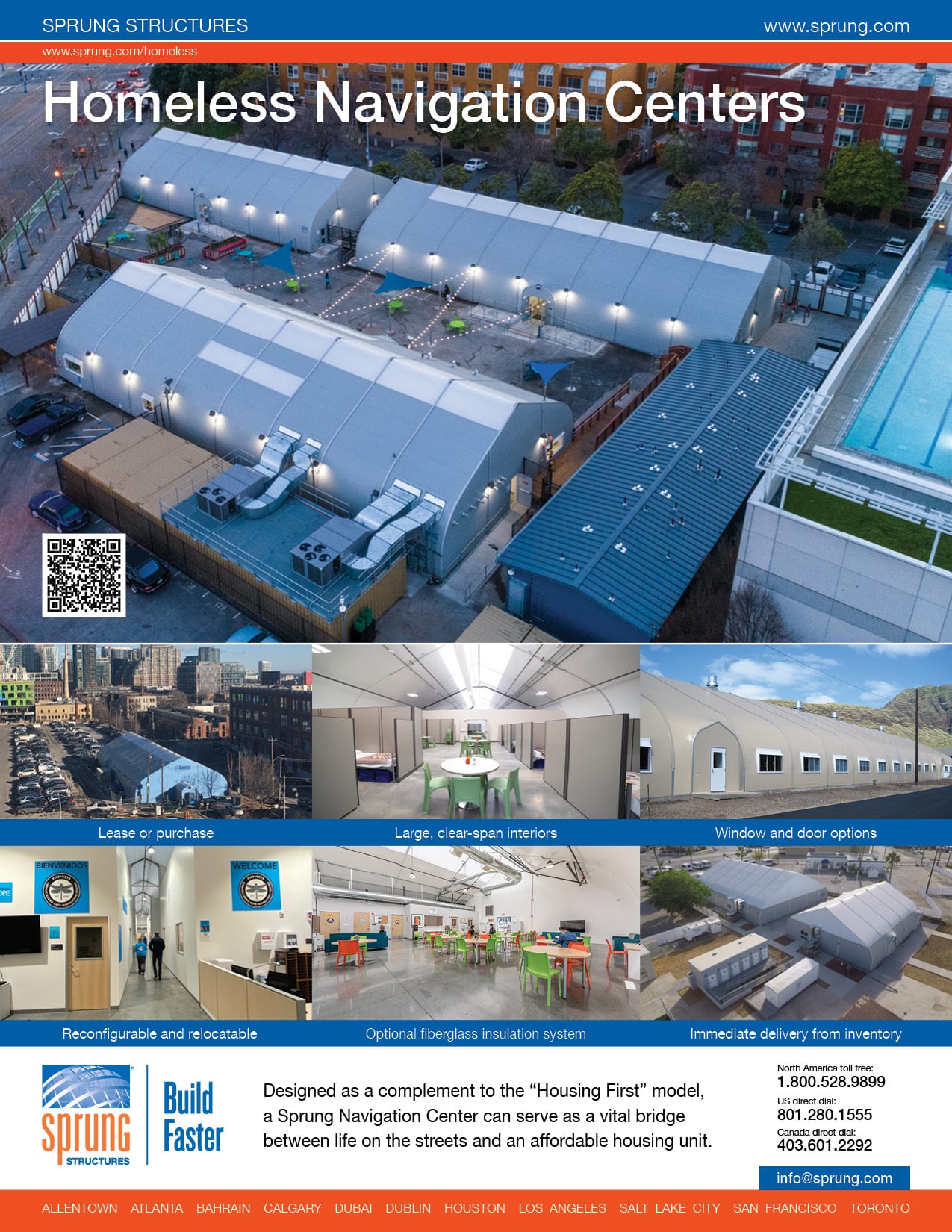
Über die Obdachlosen-Navigationszentren von Sprung
Grundrisse und Betrieb von Obdachlosenunterkünften
Obdachlosen-Navigationszentrum Komfort- und Akustiksteuerung
Erweiterung und Verlegbarkeit von Obdachlosenunterkünften
Häufig gestellte Fragen zu den Obdachlosen-Navigationszentren von Sprung
Wie unterstützen Innenräume mit freier Spannweite multifunktionale Schutzräume?
Innenräume ohne Stützpfeiler eignen sich ideal für Notunterkünfte, da sie keine Säulen oder andere Hindernisse aufweisen und somit optimal für das private und gemeinschaftliche Leben gestaltet werden können. Bereiche für Schlafplätze, medizinische Versorgung, Fallmanagement und andere Programme können mit temporären Trennwänden oder Möbeln umgestaltet werden, ohne dass kostspielige Renovierungsarbeiten erforderlich sind. Wenn sich die Anforderungen ändern, können die Notunterkünfte von Sprung schnell umgebaut werden, sodass die Betreiber ihre Dienste effizienter erbringen können.
Was sind die Vorteile der Verwendung von Gewebebauten für Übergangsunterkünfte?
Gewebebauten bieten eine schnelle und effiziente Möglichkeit, sichere und komfortable Übergangsunterkünfte zu schaffen, wenn Zeit und Ressourcen begrenzt sind. Sprung-Konstruktionen lassen sich schnell installieren und sind kostengünstiger als herkömmliche Bauweisen. Diese äußerst langlebigen Unterkünfte für Obdachlose sind für den Einsatz unter schwierigsten klimatischen Bedingungen ausgelegt und eignen sich daher für eine langfristige Nutzung. Dank ihres anpassungsfähigen Designs können Gemeinden ihre Unterkünfte bei veränderten Anforderungen verlegen oder umgestalten.
Wie können modulare Grundrisse Schlaf- und Servicebereiche voneinander trennen?
Wie nutzen Städte modulare Strukturen in ihren Plänen zur Bekämpfung der Obdachlosigkeit?
Städte nutzen modulare Strukturen, um ihre Maßnahmen zur Obdachlosenhilfe schnell um Notunterkünfte und umfassende Dienstleistungen zu ergänzen. Modulare Gebäude, wie beispielsweise Sprung-Konstruktionen, lassen sich schneller und kostengünstiger errichten als herkömmliche Gebäude. Außerdem lassen sie sich leicht erweitern, versetzen oder umfunktionieren. Diese Flexibilität hilft Städten, sowohl auf kurzfristige Notfälle als auch auf langfristige Wohnungsbaustrategien effektiver zu reagieren.
Wie wirken sich Belüftung und Tageslicht auf die Gesundheit in Notunterkünften aus?
Eine gute Belüftung und natürliches Tageslicht sorgen gemeinsam für gesündere, komfortablere Räume, die weniger institutionell und einladender wirken. Effektive Belüftungs- und HLK-Systeme verbessern die Raumluftqualität, indem sie Schadstoffe in der Luft reduzieren und so dazu beitragen, die Ausbreitung von Krankheiten in Obdachlosenunterkünften einzudämmen. Gleichzeitig fördert der Zugang zu natürlichem Tageslicht in einer Notunterkunft das körperliche und geistige Wohlbefinden der Bewohner, indem es hilft, den Schlafzyklus zu regulieren und die Stimmung zu verbessern. All diese Faktoren tragen dazu bei, die Genesung zu unterstützen und die allgemeine Lebensqualität der Bewohner und Mitarbeiter der Unterkunft zu verbessern.
Welche Haltbarkeit ist für stark frequentierte Navigationszentren erforderlich?
Häufig genutzte Navigationszentren für Obdachlose müssen einer ständigen Nutzung durch eine große Anzahl von Menschen standhalten können. Außerdem müssen sie schwierigen Wetterbedingungen standhalten können, von extremer Hitze und Hurrikanen bis hin zu eisigen Temperaturen. Die Navigationszentren von Sprung bestehen aus starken, äußerst widerstandsfähigen Bauteilen, die nur wenig Wartung erfordern und über lange Zeit sicher und langlebig bleiben. Zu den Komponenten gehören ein Aluminium-Tragwerk mit einer anteiligen Garantie von 50 Jahren und eine Architekturmembran mit einer anteiligen Garantie von bis zu 25 Jahren.
Welche Arten von Gebäuden werden für Obdachlosen-Navigationszentren genutzt?
Jedes Gebäude kann als Unterkunft genutzt werden, aber die Konstruktionen von Sprung sind eine gute Wahl für Obdachlosenunterkünfte. Die Konstruktionen von Sprung lassen sich schnell aufbauen und können leicht angepasst oder erweitert werden, um den sich ändernden Bedürfnissen einer Gemeinde gerecht zu werden. Die Spannmembrankonstruktionen von Sprung sind eine beliebte Wahl für Obdachlosenunterkünfte, da sie schnell installiert werden können und große, offene Innenräume bieten, die für eine Vielzahl von Dienstleistungen konfiguriert werden können.
Wie lassen sich schnell errichtbare Notunterkünfte in die städtische Infrastruktur integrieren?
Schnell aufbaubare Unterkünfte sind so konzipiert, dass sie sich schnell und nahtlos in die bestehende städtische Infrastruktur integrieren lassen. Diese Obdachlosenunterkünfte haben minimale Fundamentanforderungen, sodass sie fast überall leicht zu installieren sind, auch auf ungenutzten Parkplätzen und seit langem brachliegenden Grundstücken. Sie können auch über Verbindungsgänge an die bestehende städtische Infrastruktur angebunden werden. Die einfache Integration einer Sprung-Konstruktion hilft Städten, ihre Unterbringungskapazitäten sicher und effizient zu erweitern.